LiveHeart Events | Expert in Event Planning & Event Services in Ahmedabad.

LiveHeart Events | Expert in Event Planning & Event Services in Ahmedabad.
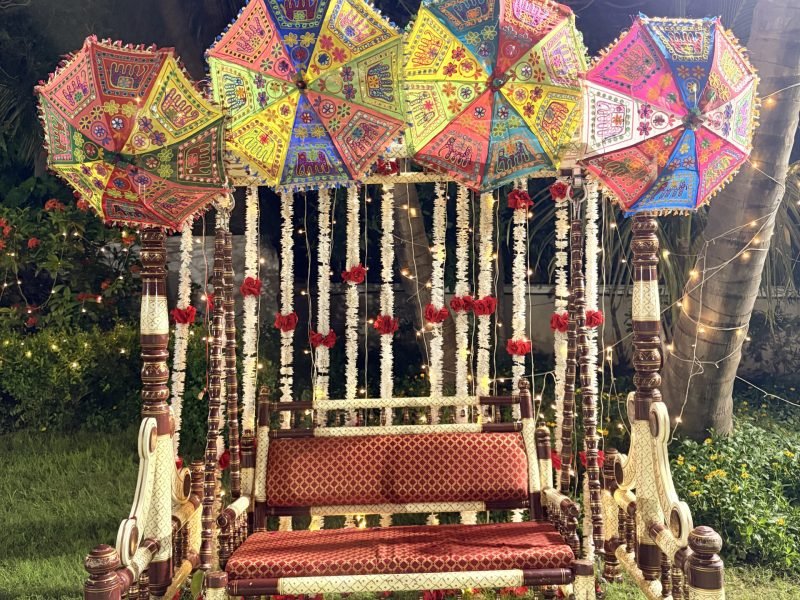
Every event we take on teaches us something new, but Teej was different. It wasn’t just another event on the calendar, it was our first time planning for a celebration outside the Christian tradition we started LiveHeart around. And it stretched us in ways we didn’t fully expect.
When the inquiry came in, we knew almost immediately this wasn’t going to be a quick turnaround job. Teej isn’t a celebration you can wing with generic decor and a standard playbook; it carries real cultural and religious weight, and doing it justice meant we had to actually understand what we were building before we could design a single element.
So before we touched a mood board, we spent days researching. Not surface-level “what colors go with Teej” research we dug into the meaning behind the festival, why it matters to the women who observe it, the rituals involved, the symbolism in the colors, the traditional elements guests would expect to see and feel. We wanted our first non-Christian event to be handled with the same respect and authenticity we’d want for any tradition we were trusted with.
Once we understood the why, the what came together more naturally. We moved into building an actual plan; timeline, vendor needs, decor concepts, the full shape of the event and started developing concepts that reflected Teej’s spirit rather than just borrowing generic festive decor.
Just when we thought we had our footing, the venue became a moving target. Weather forced us to change locations more than once which meant re-adjusting decor concepts, re-checking logistics, and re-confirming vendor availability each time. For an outdoor-leaning celebration like Teej, weather isn’t a minor inconvenience; it can shift the entire event.
Each venue change meant going back to the drawing board on certain details while trying to protect the concepts we’d already developed. It tested our flexibility as much as our planning skills.
With so many moving pieces, everything didn’t fully lock into place until just one week before the event the venue, the final decor plan, the vendor confirmations, all of it. It was tighter than we’d have liked, but two months of groundwork meant that when things finally settled, we weren’t scrambling from scratch. We were executing a plan we’d already stress-tested in our heads a dozen times over.
Beyond the logistics, Teej marked something bigger for LiveHeart proof that we could step outside our original niche and do it properly, not just adequately. It reinforced something we already believed: good event planning isn’t about applying the same formula to every celebration. It’s about slowing down, doing the research, and letting each tradition shape the plan rather than the other way around.
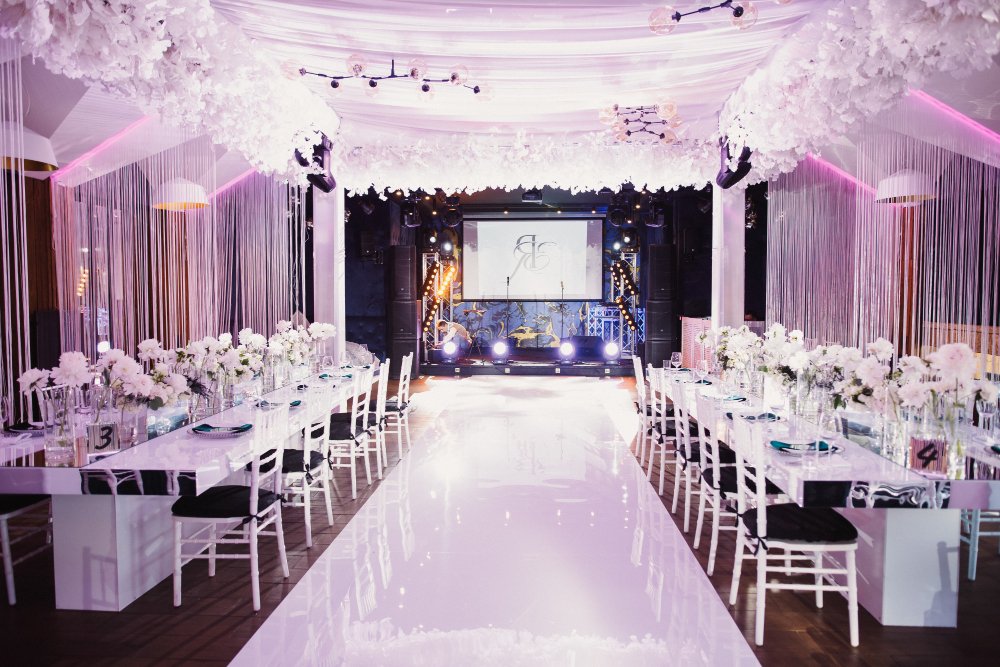
Planning a wedding or event in Ahmedabad means juggling a dozen moving parts; decor, photography, music, makeup, catering, and more. One question we get asked often is: “Who are your vendors, and how do you find them?”
At LiveHeart, we don’t work with just anyone who shows up with a good Instagram feed. Here’s how we actually build our vendor network.
Anyone can curate a beautiful highlight reel. What we care about is how a vendor performs on the day under pressure, with a room full of guests, a tight timeline, and a bride who’s already stressed enough. So instead of hiring off cold outreach or ads, most of our vendors come from events we’ve either attended, coordinated alongside, or heard about through people we trust in the industry.
Ahmedabad’s wedding and events scene is smaller and more tight-knit than it looks from the outside. Photographers know DJs, DJs know anchors, makeup artists know florists. When we’re scouting a new vendor, we ask around; other planners, past clients, our own in-house team before we ever reach out directly.
Before any vendor joins our regular rotation, we try to see them in action on a smaller, lower-stakes event first. This gives us a read on things a portfolio can’t show: how they communicate with clients, how they handle last-minute changes, whether they show up on time and prepared, and how they work alongside our coordination team rather than around it.
After every event, we check in with clients about how each vendor performed, not just the final output, but the experience of working with them. Were they easy to coordinate with? Did they listen to the client’s vision? Did they respect the timeline? This feedback loop is one of the biggest factors in whether a vendor stays on our radar.
At the end of the day, choosing vendors isn’t just about ticking a checklist, it’s about knowing that the people showing up on your event day will treat it with the same care we do. That’s the whole point of a preferred vendors list: fewer surprises, more trust, and a team that actually works together instead of just working alongside each other. If you’re planning an event with LiveHeart, you’re not just getting a coordinator — you’re getting a network we’ve spent real time building and vouching for.
Balloon décor gets dismissed sometimes as the “easy” part of event styling. It isn’t. Done well, balloons are one of the fastest ways to set an entire theme, colour story, and mood the moment someone walks into a room and done poorly, they’re the first thing that looks cheap. At LiveHeart Events, balloon styling has become one of our most requested add-ons across birthdays, baby showers, and baptisms in Ahmedabad, and each one has pushed us to work with a different technique.
Here’s a look at four balloon setups we’ve styled, each built around a completely different brief.
For a 6-year-old’s birthday, the brief was Moana which meant leaning into ocean blues, greens, and warm sandy tones, built around organic balloon clusters rather than a stiff, symmetrical arrangement. Organic clusters work especially well for character and adventure themes like this one, because the irregular, wave-like grouping of balloon sizes mimics movement waves, islands, foliage far better than a perfectly even garland would.
We paired the clusters with theme-appropriate accents scattered through the display, giving the space a sense of an island adventure rather than just “a birthday party with balloons in it.”
Takeaway for parents planning a character-themed birthday: let the character’s world dictate the balloon technique, not just the colour palette. A structured garland reads very differently from an organic cluster, and the right choice depends entirely on the theme’s energy.
Holy Communion décor calls for a different register entirely elegant, celebratory, and a little more formal than a children’s birthday, since it’s marking a meaningful spiritual milestone. For this one, we built the setup around a golden theme: a balloon entrance gate to welcome guests as they arrived, paired with a matching balloon backdrop as the room’s visual anchor.
The entrance gate does a lot of quiet work. It signals to guests, from the moment they arrive, that this is a special occasion, before they’ve even reached the main space. Keeping the entrance and backdrop in the same golden palette gave the whole event a cohesive, considered look rather than treating each element as a separate decision.
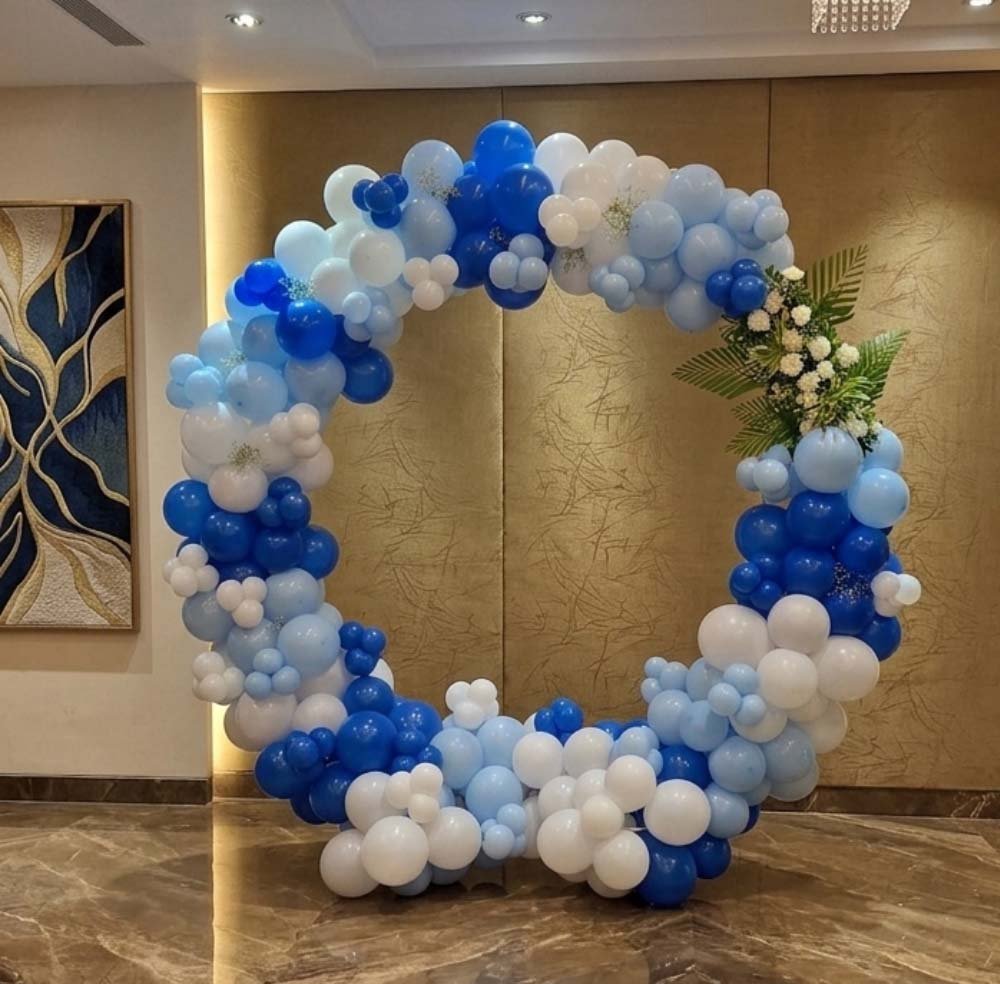
For a baptism, we returned to a more classic palette blue and white which reads as calm, clean, and appropriately reverent for the occasion. Balloon garlands and cluster accents in this palette kept the space feeling celebratory without overshadowing the significance of the ceremony itself.
Baptisms sit in an interesting middle ground between a formal religious occasion and a joyful family celebration, and the décor needs to honour both. A restrained, classic colour palette like blue and white tends to strike that balance well.
For a baptism, we returned to a more classic palette blue and white which reads as calm, clean, and appropriately reverent for the occasion. Balloon garlands and cluster accents in this palette kept the space feeling celebratory without overshadowing the significance of the ceremony itself.
Baptisms sit in an interesting middle ground between a formal religious occasion and a joyful family celebration, and the décor needs to honour both. A restrained, classic colour palette like blue and white tends to strike that balance well.
Across a Moana birthday, a golden Communion, a brown-and-white baby shower, and a blue-and-white baptism, the common thread wasn’t the balloons themselves — it was how differently the same core techniques (arches, garlands, backdrops, organic clusters) can be deployed depending on the occasion and its emotional tone.
A few principles we now carry into every balloon décor brief:
Every planner remembers their “firsts.” For us at LiveHeart Events, one of those firsts was our first roce ceremony organised right here in Ahmedabad, and it came from someone within our own church community.
We’d heard of roce ceremonies before it’s a well-known part of Goan and Mangalorean Christian wedding tradition but we’d never actually organised one ourselves. So when a member of our church community reached out with a design in mind for their roce, we said yes, and then got to work doing what we always do before taking on something new: research, and a lot of it. We wanted to understand not just the broad tradition, but the specific way this family carrying their own Goan and Mangalorean roots wanted it done, right down to the smallest ritual detail.
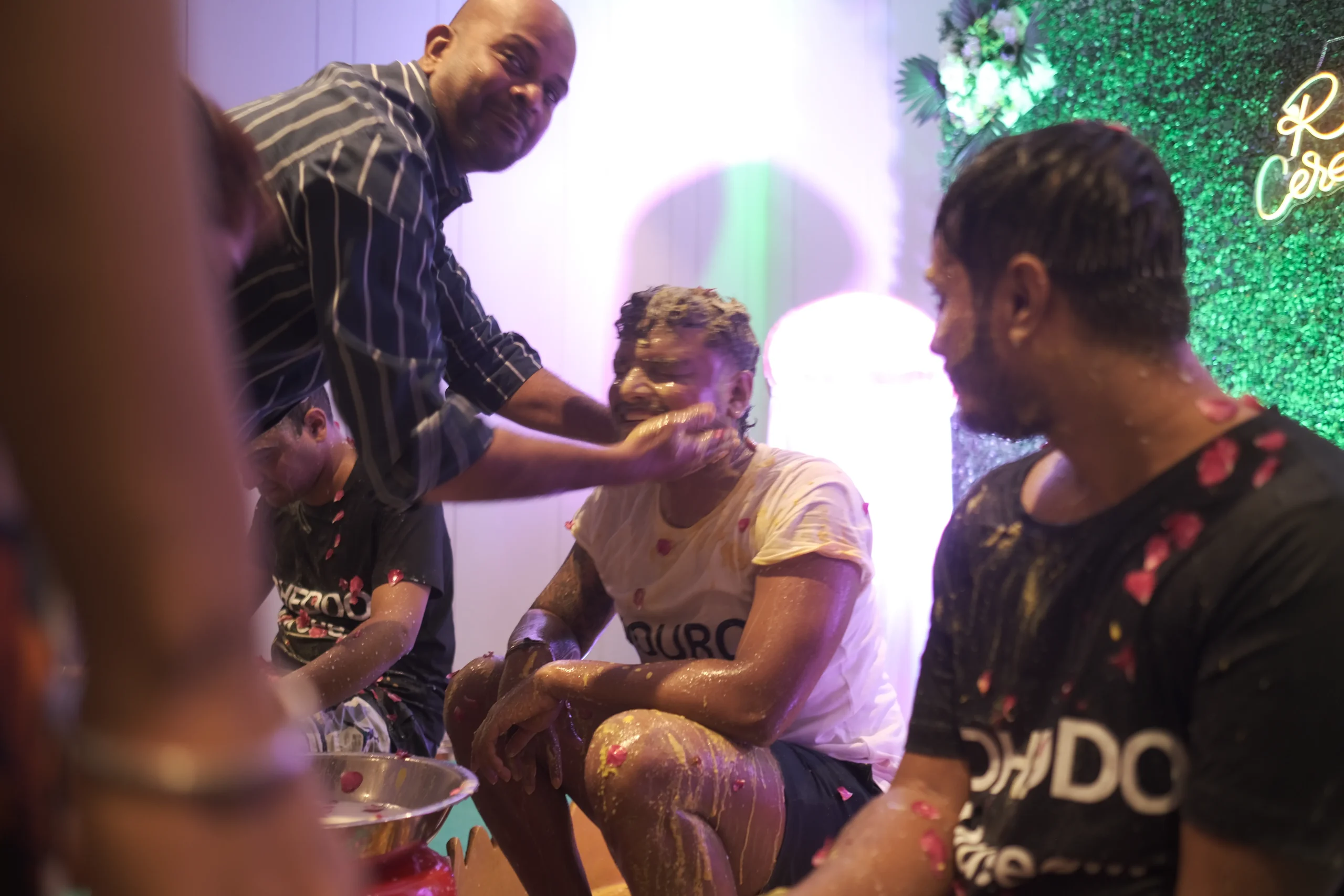
For anyone unfamiliar, a roce is a joyful pre-wedding ceremony rooted in Goan and Mangalorean Christian tradition, built around a blessing ritual before the wedding itself. In the ceremony we organised, the groom’s sister opened the ritual, pouring coconut milk over her brother and blessing him first followed by his parents, then the rest of the family and friends, each taking their turn to pour and bless in sequence. Watching that order unfold sister first, then parents, then the wider circle of loved ones was one of the most moving parts of the evening for us. It’s warm, communal, and far less formal than the wedding day itself.
Once the blessing portion was complete, the mood shifted entirely into games, entertainment, and a shared dinner. That contrast is part of what makes a roce so special: a ceremony that moves from something quietly sacred into something joyfully social, all in one evening.
Because this was our first time organising a roce, getting the traditions right mattered enormously to us not just logistically, but out of respect for the family and the Goan and Mangalorean community it came from. We made sure every element followed proper custom: who opens the blessing, the exact order in which family and friends follow, and the flow from ritual into celebration. Nothing about it was generic or improvised; it was built around what this family and their tradition actually called for.
Taking on a ceremony we’d never organised before pushed us to do something we now consider a core part of how we work: research thoroughly, and design around the specific family’s version of a tradition rather than a generic template. It paid off everything about the ceremony came together the way it was meant to, true to proper tradition and true to the family who trusted us with it.
Since that first roce, it’s become one of the ceremonies we’re proud to say we understand deeply not because we assumed we knew it was going in, but because we took the time to learn it properly the first time.
If you’re planning a roce ceremony in Ahmedabad and want it organised with real care for the tradition behind it, we’d love to be part of it.
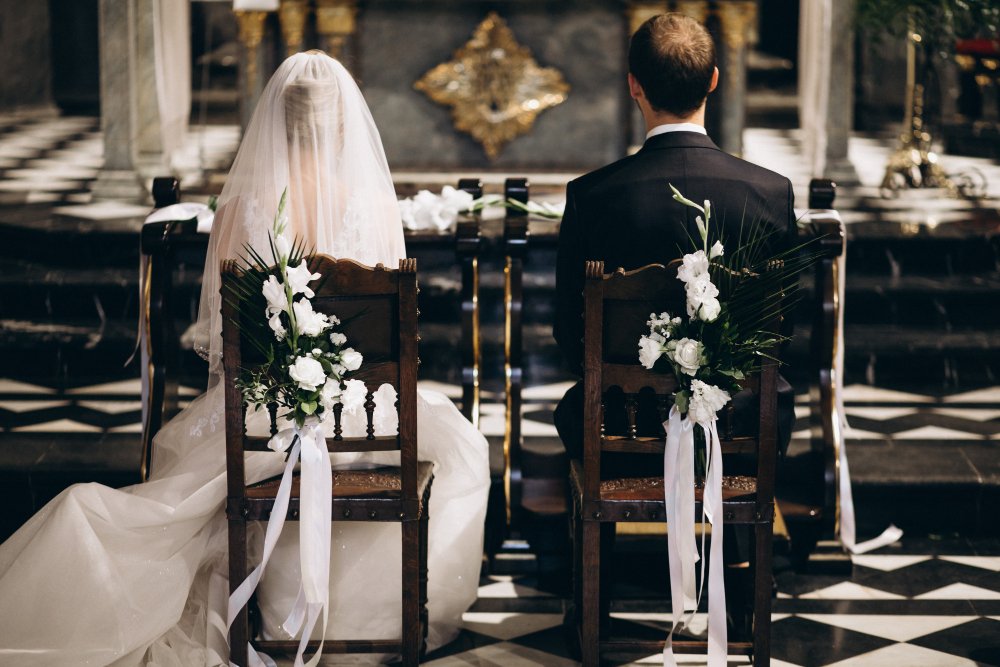
Some days test every system you’ve built. This was one of them: two church weddings, same church, same day; one in the morning, one in the afternoon. Same décor. Same makeup artist, but two completely different bridal looks. Both mixed marriage weddings. And all four members of both couples were from outside Ahmedabad, planning a wedding in a city none of them lived in.
On paper it sounds like double the work. In practice, it was a different kind of challenge altogether because the constraint wasn’t “two venues to be in at once,” it was “one venue, one décor setup, one makeup artist doing two distinct looks, and almost no room between the two ceremonies to reset.”
With both weddings sharing the same décor, our job wasn’t to build two separate looks, it was to design a setup elegant enough to serve two different couples without either one feeling like they got the “recycled” version of someone else’s wedding. That meant thinking carefully about which elements of the décor were neutral enough to carry across both ceremonies, and where we needed small, fast-to-swap touches florals, aisle details, a couple’s specific accents that could be refreshed in the gap between the morning and afternoon services without a full teardown and rebuild.
The turnaround window between ceremonies is short. There’s no world where you strike an entire setup and rebuild from scratch in that time. So the real design discipline was upfront: building one décor concept flexible enough to feel intentional for both couples, then planning exactly what needed a quick refresh and what didn’t need to move at all.
Sharing a makeup artist team across two bridal parties on the same day meant the entire beauty timeline had to be built around a hard sequence bridal party one has to be fully ready before bridal party two’s slot can begin, with zero room for either appointment to run long. We worked backwards from each ceremony’s start time to lock a makeup schedule with a real buffer built in, not just an optimistic back-to-back plan that falls apart the moment one thing runs five minutes over.
What made this trickier and more interesting is that the two brides wanted completely different looks. This wasn’t a case of the same artist repeating one style twice for efficiency. Each look had to be planned, product-prepped, and timed on its own terms, which meant our makeup artist needed a proper reset between appointments, not just a touch-up turnaround. We factored that into the schedule from the start: enough buffer not just for delays, but for the artist to genuinely shift gears between two distinct bridal styles in one morning.
Here’s the part that doesn’t show up in a “two weddings, one church” headline: all four people getting married, both couples were from outside Ahmedabad. That shifted a lot of what would normally be the couple’s own legwork onto us: local vendor knowledge, church logistics, timing norms, even guidance on what’s realistic to plan for in the city versus what needed to be arranged in advance from wherever they were coming from.
Both weddings, also being mixed marriages, added another layer blending traditions and expectations from both sides of each couple, in a city that was unfamiliar to everyone involved. That meant more upfront conversation with each family to understand what mattered most to them, rather than assuming either couple’s ceremony should look a certain way by default.
Two weddings, one church, one day isn’t a scenario you plan for casually; it’s a genuine stress test of how tight your systems actually are, from décor to beauty scheduling to being the local expertise for two families who had none. It confirmed something we already believed about how we work: the constraints don’t get to touch the couple’s experience, even when, especially when the day behind the scenes is this tightly wound.
If your wedding date happens to share a church with someone else’s, this is exactly the kind of planning that goes on so your day still feels entirely your own.
WhatsApp us